





Photo Andrew Purnell
It’s #WorldMentalHealthDay, and today we are reminding our Scouting family members that mental health and wellbeing matters, just as much as physical health. In Scouting, we do more than just talk about it, we live it. 💜⚜
In 2016, a study by the Universities of Edinburgh and Glasgow found that being a Scout or a Girl Guide helps to lower the risk of mental illness later in life. This was attributed to the structured nature of Scout activities, which encourage progressive self-education, the development of noncognitive skills, and activities in natural environments.
Benefits of Scouting on our mental health
Jumping to current studies where tools for fostering mental health are listed, we realise that these conclusions still ring true today. There are many ways in which Scouting enhances mental health, ranging from fostering resilience and building self-confidence, to encouraging outdoor exploration, teaching adaptive coping skills for stressful situations, and providing a strong sense of belonging to a positive organisation. Here are a few examples:
- Increased resilience and skills development: Scouting’s structured activities, advancement programmes, and learning by doing methodology, help young people develop skills to overcome obstacles and difficulties. Scouts also acquire soft skills like communication, setting goals, project planning, and problem-solving. These abilities help them in coping with their emotions within their daily circumstances.
- Improved self-confidence: By learning new skills and achieving personal goals within the various Scouting programmes, both our young people and volunteers are able to build their self-esteem and self- confidence.
- Strong sense of belonging to something positive: Scouting provides a supportive community where young people and volunteers can be themselves in a non-judgmental environment, especially for children and youth who may struggle to fit in.
- Positive role models: Scouting often fills the void between home and school life where positive adult role models are absent. Scouting volunteers and youth leaders such as Sixers, Patrol Leaders, and Rovers, provide positive adult and peer role-models for young people to trust and aspire to.
- Spending time in nature: With more and more people spending time indoors gaming or on social media, experts are highlighting the importance of getting active and being outdoors for mental health development. Scouting encourages members to explore and conserve the natural world through hiking, camping, biodiversity projects and more.
- Gaining a sense of purpose: Giving back to others by being a Scout volunteer or implementing Scouting community service actions in local communities builds a sense of purpose and personal value.
These benefits might seem as just “nice to haves”, but in reality, they’re essential skills for a healthy and happy life. Find out more about SCOUTS South Africa HERE.
We are a Scouting family that stands together.
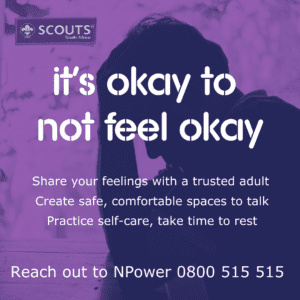 Even though Scouting’s positive impact on our mental health is clear to all who practice it, we understand that the realities of everyday life can be hard. Today on #WorldMentalHealthDay we want to remind YOU, our members, that you are not alone! We are not individual Scouts trying to navigate our world, we are a Scout family and are here to support each other.
Get more information on who to call for help or how to help each other HERE.